Posts

Showing posts with the label Reading

Games Stories!

Image
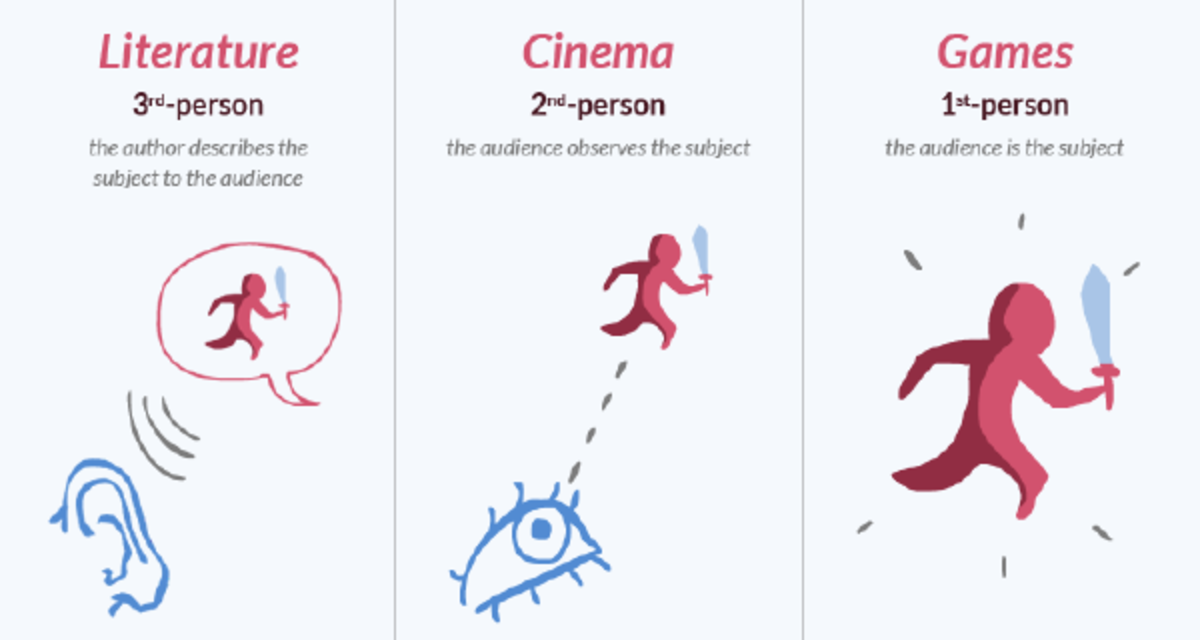
Games Stories! This weeks reading was about  'What Every Game Developer Needs to Know about Story' by John Sutherland. I really enjoyed reading this article as it was very interesting. Instead of the typical every week reading tasks about game design, the definition of a game, etc. This weeks reading was about the overall picture of a game, the universal human experience and the story behind the game. I found many parts of this article interesting especially when Sutherland mentions how similar stories are to games but in when it comes to the game, the player should have different options, the ending shouldn't be predictable as it would be different for everyone, whereas with a dialogue the player will know every aspect of the game, why they're making a choice, what it'll result in, how it ends etc. When the player knows all of this information, there won't be any anticipation/ excitement as the player will know what to expect. That is what I made out of the fir...

Week 9 Reading and Writing!

Image
Reading and Writing Reflection! In this week’s blog post I will be reflecting on the reading and writing assignments, they have actually been working well for me, surprisingly they’re what I enjoy/ed doing most in this module. I enjoyed it most because I like writing and am good at summarising things, although I have never written this much about Game Design in my life, it’s been nice learning about it.  My favourite reading so far has been the Game MDA one, it’s my favourite because it helped me further my knowledge on Game Design while also understanding the point and definition of a game. I divided my notes into summarised bullet points since that helps me learn easier.  My notes have been helping in a way and that is of understanding what the meaning of a game is, why people play games, what makes it fun, what my game should consist of etc, in that way, not really in a way of knowing how to design the game but that’s what the lengthy Unity tutorials are for, right? When it...

Reading!

Image
Reading Week 8 “Game Fun" Games can be described by the 3 components Mechanics, Dynamics, and Aesthetics (MDA) or otherwise stated as rules – system – “fun” . The three reading selections this week and the synopsis below all address the term “fun” in relation to game design. There are eight types of Fun outlined by the MDA. These eight are both a source of reference and player experience that blend together in many ways, and essentially what makes a game engaging and enjoyable. Figure 1: Eight kinds of Fun Both Oxford and Merrian dictionaries define Fun as an enjoyment, delight but within the context of a game it refers to a form of pleasurable entertainment. MDA papers define the '8 kinds of fun' sensation, fantasy, narrative, challenge, fellowship, discovery, expression, and submission, remain a source of reference and possibly the most popular list of player interactions combining in various forms to attract each player to a particular game. Nicole Lazzaro presents fou...

Games GDD!

Image
  What is the GDD for? A Game Design Document (GDD) is a blueprint for the design and development of a game. A game design document is a way of being creative and documenting the approach to the development of the game.  Gonzale (1999) states that “ the important thing is to have something that describes your game project (or any other project for that matter) before jumping into production . Gamasutra  It should help to plan out your game. Though it is recommended that the GDD should be short it needs to be detailed enough so as game developers and artists can coordinate the development of the game independently whilst still keeping to the design. Example of a GDD The GDD is a blueprint for how the game is going to be designed and built, similar to a mind map. In conclusion, the game design document is vital to making a game and it is important to have in order to describe your game project. How do we make one? There are a variety of tools that could be used to create ...

Game MDA!

Image
Game MDA! What is Game MDA exactly? According to  Robin Hunicke, Marc LeBlanc, Robert Zubek's paper, MDA is a formal approach to understanding games and the difference between game design and development, game criticism, and technical game research. MDA stands for Mechanics, Dynamics and Aesthetics. Game MDA Mechanics: the components of the game, at the level of data representation and algorithms.  Dynamics: the mechanics acting on the player's inputs and each others outputs over time.  Aesthetics: the desirable emotions in response when the player interacts with the game. What makes a game "fun"?  According to this paper there are 8 characteristics that make a game fun, they are: 1. Sensation- sense-pleasure  2. Fantasy- make-believe  3. Narrative- drama  4. Challenge- obstacle course  5. Fellowship- social framework  6. Discovery- uncharted territory  7. Expression- self-discovery  8. Submission- pastime The second paper I read is...

Game Design!

Image
Game Design! I never really understood how Games were made or how much work goes into Progress of Game Design making them, since I don’t really play games but after reading the articles I was assigned to read, I realised there was so much more to Game Design than what I thought there was. I gained an appreciation for it like I do for Art History, since the making of a game is an art in a way. Our Professor, Shaun,  provided us with many articles regarding Games/ Game Design. The first of them being What is a game? (by Ian Schreiber)   As I started to read and analyse the article, I quickly understood that it wasn’t as easy as just googling the definition of a ‘game’, which according to Google the definition of a game is ‘ an activity that one engages in for amusement or fun’, which made me laugh because I spent so long reading different articles on the definition of a game to read what Google’s literal definition was .  Although there is a definition for a game given by ...